


Google Gemini Intelligence Could Leave Most Samsung Galaxy Phones Behind
The search engine giant has finally rolled out its latest AI enhancement for Android phones in the form of the Gemini Intelligence system, but the launch is bound to be disappointing for millions of Samsung users since the new software comes with some extremely stringent hardware requirements.
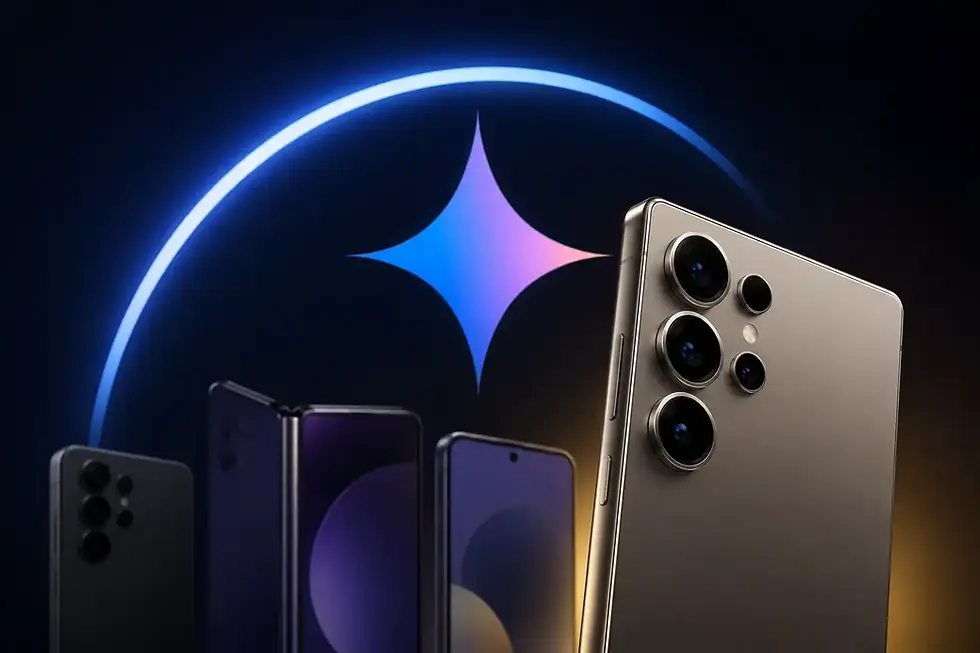
With the integration of artificial intelligence into the Android environment becoming increasingly central, it seems that Google is making a clear distinction between top-tier smartphones and mid-range devices. Unfortunately, Samsung customers who own Galaxy A series phones and old foldable devices may never get to use the new technology.
What is Google Gemini Intelligence?
The new system called Gemini Intelligence by Google intends to revolutionize the relationship between an Android user and his/her device. It is intended not only to respond to requests but also to be proactive and provide assistance based on information collected by the services used by a particular user.
For example, the system can collect information from various apps such as Gmail, Google Calendar, Google Photos, Maps, and others to give more relevant recommendations and support to a user in real-time. The idea is to offer an individualized experience of AI-based support on an Android device.
In other words, Google tries to make Android a fully-fledged AI operating system.
Also Read: OpenAI ChatGPT Health Launches With AI Medical Records Fitness Tracking and Smart Health Insights
Google Confirms Heavy Hardware Requirements
Despite all the promising aspects of the artificial intelligence technologies, Google has confirmed that its Gemini Intelligence technology needs exceptionally powerful hardware to work properly. According to the company, there are a number of sophisticated requirements for devices that will support Gemini Intelligence technology.
They include:
A flagship-grade chip
Minimum 12GB RAM
AI Core support
Compatibility with Gemini Nano v3 or above
Security updates for six years
Android software updates for five years
As one can see, these requirements rule out most of the Android-powered smartphones available on the market today.
Even some of the premium smartphones released one or two years ago may fail to satisfy the stringent requirement of being compatible with Gemini Nano v3 or above.
Most Samsung Galaxy Phones Won’t Support Gemini Intelligence
Samsung users could be among those worst hit by such restrictions. Although Samsung manufactures millions of Galaxy handsets every year in different price brackets, very few actually fulfill the requirements laid down by Google.
The RAM and chipset restrictions alone disqualify almost all Galaxy A series of smartphones, which continue to remain the most favored line of smartphones made by Samsung.
Even handsets equipped with 8GB RAM but fitted with powerful processors would not be able to make it on the list. Perhaps what is more surprising is that there are some high-priced foldable phones that have been disqualified too.
As per the revealed requirements, handsets like the Samsung Galaxy Z Fold 7 and the upcoming Galaxy Z TriFold have failed to pass the Gemini Nano v3 test, which means that these high-end products might not be able to run Gemini Intelligence. This proves that Google is working very aggressively towards optimizing Gemini Intelligence for next-generation AI hardware.
Only Three Samsung Phones Currently Qualify
At the moment, only three Samsung smartphones reportedly meet all the necessary conditions for Gemini Intelligence support:
Samsung Galaxy S26
Samsung Galaxy S26+
Samsung Galaxy S26 Ultra
These are Samsung’s latest flagship devices equipped with the newest chipsets, upgraded AI processing capabilities, and larger memory configurations.
The inclusion of only the Galaxy S26 lineup highlights just how demanding Google’s new AI ecosystem has become. For users holding onto older flagship Galaxy devices, this news may be disappointing, especially considering many of them are still highly capable smartphones in terms of everyday performance.
Future Samsung Foldables May Support Gemini Intelligence
Even with the current limitations, there is still hope for future Samsung smartphones. Google confirmed that Gemini Intelligence would land on Pixel and Galaxy handsets in the coming months. This indicates that future Samsung foldable phones set to launch soon might get Gemini compatibility. These include future Galaxy Z Fold and Galaxy Z Flip series that will be powered by advanced AI-enabled processors and increased memory options.
Another Galaxy smartphone series that is set to debut next year, the Galaxy S27 series, should also come with built-in Gemini Intelligence capabilities right off the shelf. Samsung and Google have been collaborating closely on the development of Gemini AI. Future flagship Galaxy handsets will definitely be made with Gemini in mind.
Why Google is Limiting Gemini Intelligence
The strict hardware requirements may seem excessive at first, but there’s a clear reason behind Google’s decision.
Gemini Intelligence relies heavily on on-device AI processing rather than cloud-only computing. Running advanced AI models locally offers several advantages:
Faster response times
Improved privacy
Reduced internet dependency
Better contextual understanding
Real-time AI features
However, these benefits require significant processing power, memory bandwidth, and dedicated AI acceleration hardware.
Google appears to be prioritizing performance and reliability over wider compatibility. Instead of offering a scaled-down experience on weaker devices, the company is focusing on delivering the full AI experience only on hardware powerful enough to handle it smoothly.
Samsung’s AI Strategy Faces New Challenges
This could present some difficulties for Samsung’s AI plans. Samsung has been heavily marketing its Galaxy AI on all its smartphones, even introducing some of its AI features to its older flagship models via software upgrades. But the Gemini Intelligence could present a new gap where only ultra-high-end smartphones can enjoy Google’s top AI functions.
This could have a significant impact on people’s decision-making when purchasing their next smartphones. The buyers might now consider RAM size, AI hardware, and even long-term AI support as important as camera performance or battery capacity. For Samsung, making sure that its future products would be compatible with AI could be crucial in this ever-changing AI smartphone competition.
Google’s Gemini Intelligence marks an important milestone for Android AI experiences, yet another indication that a new hardware era is starting where advanced AI functionalities require flagship-level specifications.
Unfortunately, this implies that most Samsung Galaxy smartphone owners will have to wait before getting the benefit of using Gemini Intelligence. Even premium foldable models seem left out because of the stringent AI capabilities.
As AI becomes more critical to the functionality of smartphones, the difference between flagships and mid-range models will be larger than ever before. Those interested in benefiting from Google’s cutting-edge AI functionalities will likely need to upgrade their hardware sooner rather than later.
With Samsung’s upcoming foldable phones and Galaxy S27 series featuring Google’s Gemini Intelligence, we can expect to see the emergence of AI-native smartphones in the near future.


Comments