


WhatsApp Removes Avatar Feature as Platform Shifts Focus to Core Messaging Experience
- Utshab Biswas

- May 4
- 3 min read
Without causing much noise on the part of users, WhatsApp has begun to roll out the removal of one of the most unused functions on its platform – avatars. The difference with previous updates is that this function is being eliminated silently without much attention, which clearly indicates the level of its acceptance or lack thereof by WhatsApp users.
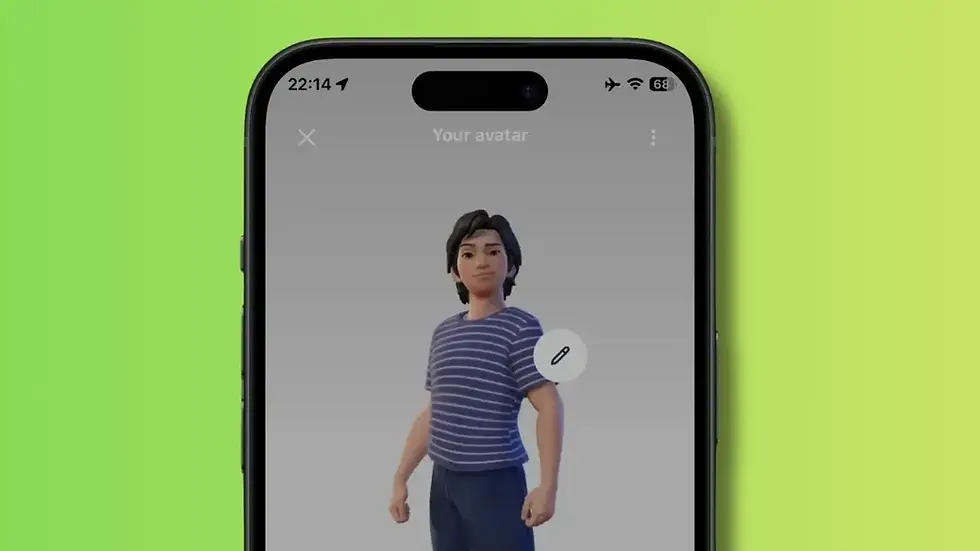
It goes without saying that the majority of WhatsApp users never really used the function of avatars or just tested it out at some point. As such, WhatsApp has decided to remove it completely as it serves no use anymore for the majority of its user base.
What Exactly Is Being Removed?
Based on some reports by WABetaInfo, WhatsApp will begin rolling out its removal of avatars across Android and iOS, and this process has recently been sped up.
There are several aspects on which the removal of avatars will take effect:
First, the option of creating and editing avatars has been turned off. As reported, the setting section where one can access the avatar tools shows error notifications saying that the function is not available. In addition, the setting section itself may even have been completely deleted in many cases.
Second, the removal will concern the display of avatars on both profiles and chats. It means that one will no longer be able to use the flip animation between avatars and actual profile photos.
Lastly, the removal process involves disabling the shortcut to the avatar function from the keyboard.
One must pay attention to the fact that already-sent avatar stickers will not be affected and won’t disappear from conversations. The only difference is that they cannot be created anymore.
A Feature That Never Truly Caught On
It's not clear why WhatsApp made this move, but the reasons for doing so were evident. This was low user adoption.
Initially, the avatar feature had big ideas. Users could create an avatar by customizing facial features, hair style, outfit, or animate their own avatar. As time passed, Meta made this avatar system more elaborate, providing various styles, and personal stickers. However, these attempts have failed to attract the interest of users.
The major reason behind the poor performance was a difference in the purpose of using the avatar feature and its application on WhatsApp. The whole point of using WhatsApp is to communicate – send messages, make calls, etc. Working on your avatar on WhatsApp contradicted the purposes of using it.
Conversely, the success of Snapchat with avatars like Bitmoji is explained by their purposes. The essence of Snapchat is self-expression through visual means, which is why creating avatars fits perfectly.
What This Means for WhatsApp’s Future
This decision is more than just removing an underused feature it highlights a broader strategic direction.
WhatsApp is increasingly focusing on features that directly enhance communication. Instead of experimenting with social-expression tools, the platform is investing in improvements that impact everyday usage.
Recent developments make this direction clear:
Enhanced voice and video calling features
Message editing capabilities
AI-powered tools and smart features
UI improvements like upcoming interface redesigns
Features such as noise cancellation for calls
These updates align closely with what users actually need faster, clearer, and more efficient communication.
By removing avatars, WhatsApp is effectively reallocating resources toward features that deliver real value at scale.
Do You Need to Do Anything?
Absolutely nothing, Those who did not use the avatars won’t have any difference noticed. The previously used sticker sets of avatars will remain active in the chat.
The only feature being removed here is the creation of stickers or their edition. There is no particular timeline offered by WhatsApp when it comes to full removal of this feature, but considering how quickly it happens now, there might be only a few weeks left until then.
While the deletion of avatars may not appear significant at first glance, it is symbolic of how modern tech platforms develop. Elements that do not connect with the user base, regardless of how attractive or innovative they might be, will ultimately fall away.
When it comes to WhatsApp, this approach highlights an important principle: stick to what works for the consumer. For WhatsApp, it appears that avatars failed to pass this test.


Comments