


Fake e-Challan SMS Scam Alert How Car Owners Are Being Tricked in India
- Utshab Biswas

- Jan 16
- 3 min read
Another phishing scam, this time meant for all car owners in India, is also spreading via SMS in the form of traffic E Challan notifications. These are phishing frauds in which fraudsters attempt to trap people into clicking phishing URLs in order to give out their sensitive information. This phishing message tries to deceive victims as it looks exactly like a challan notification sent online by traffic authorities.
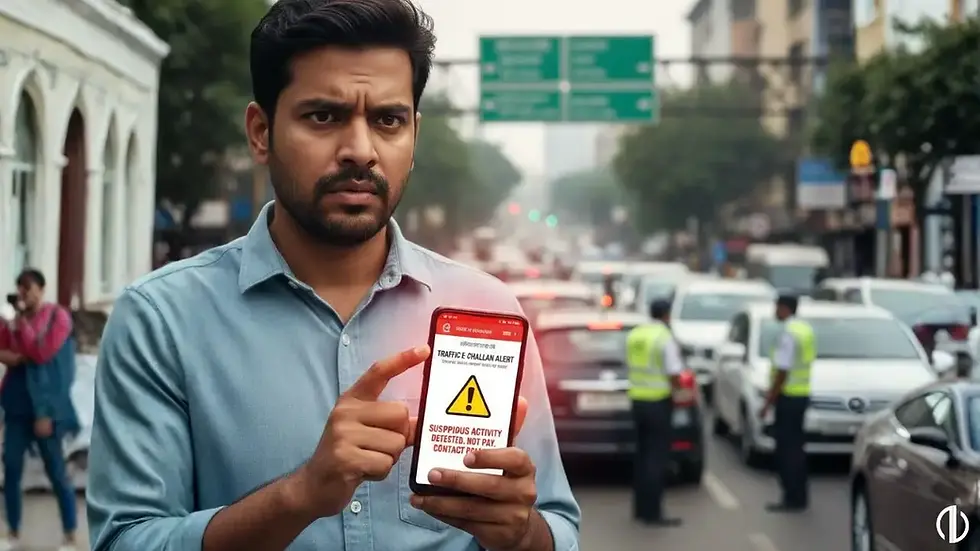
In recent days, cases have been observed in which several users have received malicious texts, and it is also believed that several car owners are already being targeted. With online payments and challans being increasingly used, scammers are leveraging this to instill fear in car owners.
What Does the Fake e-Challan Message Look Like?
One such phishing SMS reads:
“A Traffic Challan BH5065678749 of Rs.3000 has been issued against your vehicle on 08-12-2025. To view and download challan please visit https://echallan.live/app.”
At a glance, this message appears official and convincing. However, the link leads to a fake or inactive webpage, and in many cases, similar links may redirect users to malicious websites designed to steal information such as:
Bank account details
Debit or credit card numbers
OTPs and login credentials
Even if the page looks harmless initially, such links can later be used to deploy more advanced phishing techniques.
Why This e-Challan Scam Is So Effective
Scammers bank essentially on fear and urgency. The very thought of having to pay for a fine not paid for a traffic violation, with additional penalties, prompts quite a number of car owners to take quick actions without message verification. And that's exactly where fraudsters succeed.
A major red flag in these fake messages is that the vehicle registration number might not be mentioned in them. On the other hand, a real e-challan alert would specifically include your exact vehicle number among other verifiable details.
The other red flag is the sender themselves. Genuine challan messages are only sent through authenticated government sender IDs, like from official traffic authority channels, and never from random mobile numbers.
Banks and Authorities Issue Warnings on Fake e-Challan Scams
The scale of this scam has become so widespread that financial institutions have begun issuing public advisories. For instance, American Express has alerted users with the following message:
“Beware of Fake e-Challan Scams Scammers are sending fake e-Challans that may contain fraudulent links to compromise your banking, Card or personal information. Please validate merchant name and amount in the OTP message before making a payment.”
Similarly, the National Crime Investigation Bureau also shared warnings on X (formerly Twitter), cautioning citizens against clicking unknown links related to traffic challans.
How to Check If Your e-Challan Is Genuine
In case you get any kind of SMS stating that you have got a traffic challan, do not open the link. First of all, check its authenticity on trusted websites.
You can log into the official Parivahan e-Challan Portal to check your challan status without any hassle. In this portal, you can check your pending challans by entering:
Vehicle registration number, or
Drives license info
Moreover, you are also able to access valid challan details through trusted apps like CRED, which fetches data directly from the government portal, thereby not requiring any clicks on third-party links.
Key Things to Remember to Avoid e-Challan Frauds
To stay protected from such phishing scams, always keep these points in mind:
A real e-challan message always mentions your vehicle registration number
Genuine challans come only from official government sender IDs
Never click links from unknown or suspicious SMS messages
Always cross-check challan details on the Parivahan portal
You can also safely verify challans using apps like CRED
That said, cyber criminals are constantly refining their modus operandi. In some complicated frauds, even your correct vehicle number is mentioned in the SMS, and this looks absolutely convincing. This is why manual verification through authorized platforms is safest, no matter how convincing the message looks.
It is important to note, however, that in today's world of digital convenience, digital risks also exist. Never underestimate digital risks. Always confirm data from sources you trust to prevent you from incurring losses due to identity theft. When you receive a challan message from a source you're not certain about, it's always important to be cautious; your wisest action is to be careful.
Take care and for more tech news and updates on digital safety, keep reading AndroBranch.


Comments